What changed in people
Sermorelin Research Found 1 Brief Hormone Rise
The children gained height faster. Blood from older men contained more growth hormone during 1 short study. No trial proved fat loss or slower aging.
Children grew faster and older men had more hormone
Children with slow growth gained height faster. Over two weeks, blood from older men contained more insulin-like growth factor 1 as well as more growth hormone. The first hormone came from the liver and helped the second one work. Researchers found 1 rise by drawing blood through each full day. Most often, the skin around the injection spot was mildly sore. No trial proved fat loss, muscle gain, or slower aging. Short studies can't tell you what years of use may bring.
Sermorelin makes the growth gland release stored hormone
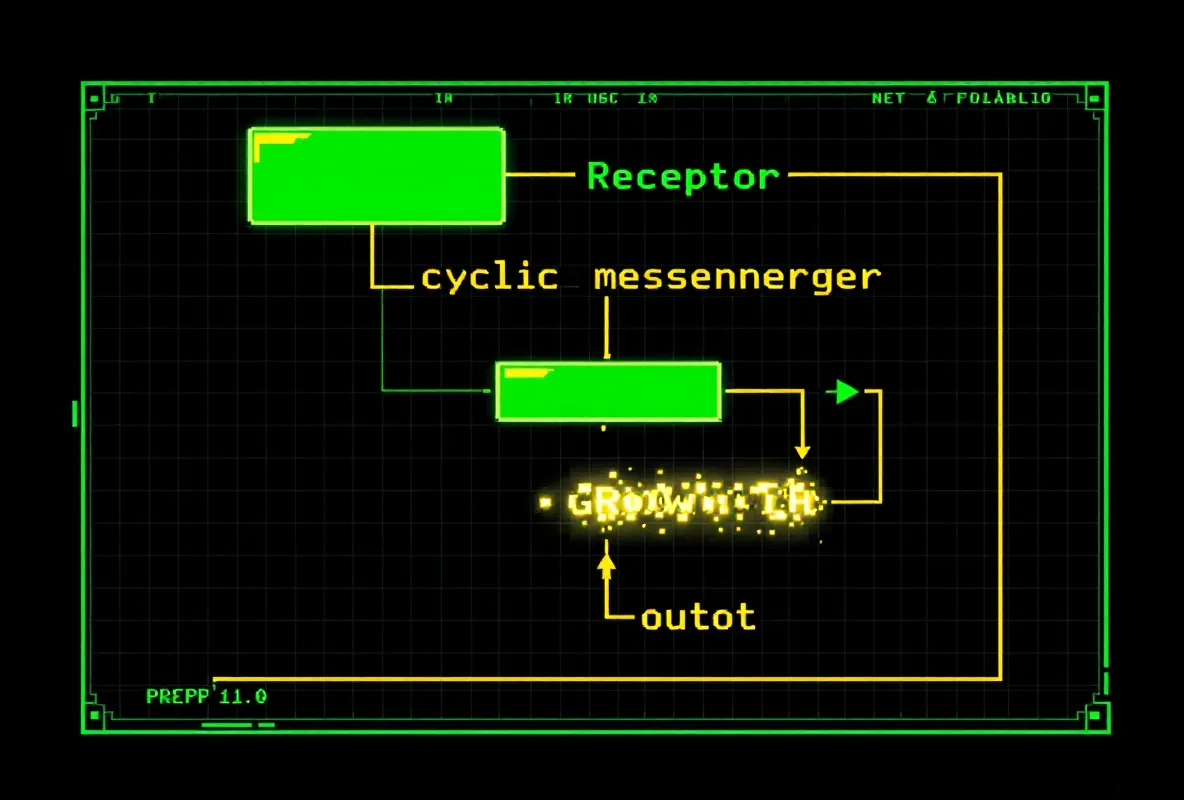
The pituitary is the pea-sized growth gland below the brain. Sermorelin fits 1 spot on cells in that gland. The cells then move stored growth hormone to the blood [15]. That is where the drug's work begins.
Sermorelin copies the first 29 protein pieces from the brain's own hormone [15]. Those pieces make the gland free its growth hormone. In response, insulin-like growth factor 1 rises from the liver and helps growth hormone work [4]. A 2025 review describes 1 set of these steps, but it does not establish any new use for patients [15].

Sermorelin raised hormones but didn't prove slower aging
In the 1 adult trial, healthy men were about 68 years old and, for 14 days, got 0.5 mg or 1 mg in the morning and again later each day. Researchers drew blood many times over each 24-hour day, then worked out the average growth-hormone level. The larger amount produced a bigger average rise and brought two hormones near young men's levels. Morning blood sugar taken before food did not move [2]. In 1 child study, growth rose from about 4.1 to about 7-8 cm/year [1][5]. Neither result proves slower aging.
Sermorelin gave 1 short blood result, not a daily benefit
Older men received sermorelin twice daily for 14 days. The study found 1 clear change: their blood held extra growth hormone, near the level in young men [2]. A 2025 review lists other uses that researchers may test [15]. The review doesn't prove 1 day-to-day benefit for you.
A separate trial followed 152 older adults for 20 weeks. Of those people, 66 had mild memory or clear-thinking problems. Tesamorelin, a related drug, improved a test of planning and problem-solving. Insulin-like growth factor 1 climbed by 117%, and the body-fat measure dropped by 7.4% [6]. Those results belong to tesamorelin, not sermorelin.
Sermorelin before and after meant height and blood draws
The child study tracked height, not photos. In 1 child study, growth rose from about 4.1 cm/year to roughly 7-8 cm/year during the first year [1]. In 1 adult study, workers drew blood through each 24-hour day before and after 14 days of treatment [2]. The larger amount brought both hormone levels near those of young men.
No sermorelin trial here proved a lasting change in an adult's build. Body fat fell 7.4% with tesamorelin after 20 weeks [6]. Tesamorelin isn't sermorelin. Ads may blur the difference when you judge claims about sermorelin.
Sermorelin and testosterone gave 1 clear gland difference
In 1 study, healthy men aged 60-77 received testosterone. A morning blood draw found insulin-like growth factor 1 and growth hormone both higher. Yet after researchers gave 2 test drugs—one like sermorelin and one like ipamorelin—the glands didn't release a larger peak amount, meaning testosterone changed usual hormone levels but not the gland's best answer [9].
In 1 more study, men with more belly fat tended to release less growth hormone. Belly fat accounted for about 41% of the differences among the men [8]. Another study considered 3 starting facts: belly fat, insulin-like growth factor 1, and the protein that carries that hormone. Together, those facts lined up with 60% of the differences in how strongly the men answered 2 lab drugs [10]. The findings help explain different blood results, not who will feel better.
Sermorelin uses the gland; a hormone shot bypasses it
A direct shot places growth hormone straight in your bloodstream. Sermorelin first makes the pituitary, or growth gland, empty what it has stored. Other hormones still slow the gland once enough has been released. In 1 review, the author wrote that working through the gland may better match the body's usual work, though sermorelin leaves blood fast [4][3].
Tesamorelin has body-fat proof that Sermorelin lacks
Both drugs copy one brain hormone, but tesamorelin lasts longer. Tesamorelin has approval for an HIV-associated problem with stored fat. Trials tested 1-2 mg/day [6]. In 1 trial lasting 20 weeks, people took 1 mg/day. Insulin-like growth factor 1 rose by 117%. The measured share of body fat dropped by 7.4%. Those are not sermorelin results [6].
Sermorelin side effects were mild in short studies
Mild pain at the injection spot was the most common problem. In 1 study, 20 short children received 1 microgram for each kilogram of a child's weight; a gram contains a million of those tiny amounts. The drug went into a vein. Prolactin, a hormone tied to breast milk, and two hormones involved in puberty rose a little for a short time [7]. Researchers saw no harm from that brief change, but the study cannot answer what years of use might do for you.
Long-term safety in adults is not well known, mainly for aging claims [5]. Growth hormone tells cells when to divide, which raises a cancer concern. Long studies here have not shown that sermorelin causes cancer [15]. Research facts cannot give you a personal safety answer.
No study here shows Sermorelin raising testosterone
Sermorelin and testosterone work in different ways. In 1 study of healthy men aged 60-77, testosterone raised insulin-like growth factor 1 as well as growth hormone in usual blood draws. Researchers also gave 2 test drugs, one like sermorelin and one like ipamorelin. Testosterone did not make the gland's largest growth-hormone release any bigger [9]. Nothing here shows sermorelin raising testosterone.
Sermorelin lacks tesamorelin's body-fat result
Each drug makes growth hormone flow from the pituitary, or growth gland. Tesamorelin was designed to stay longer. Its approved use is an HIV-associated problem with stored fat. At 1-2 mg/day, insulin-like growth factor 1 increased and body fat fell. That result does not carry over to sermorelin [6].
Sermorelin and another drug raised 2 hormones
An older-adult study paired a sermorelin-like drug with another lab drug that works much like ipamorelin. After 1 dose, the second drug made the growth-hormone rise larger. For 30 days, shots went under the skin. Within 24 hours, the 2 hormones rose and stayed high: insulin-like growth factor 1 and growth hormone [11]. Using the 2 drugs together released more growth hormone than either way alone. The study did not show that people felt better, and it is not a dose plan for you.
Sermorelin hasn't proved body-fat loss
Men with more belly fat tended to release less growth hormone. In one study, belly fat accounted for about 41% of the differences among the men [8]. Other causes still mattered. Body fat dropped 7.4% after tesamorelin [6]. That finding belongs to tesamorelin, not sermorelin.
Weight-loss claims go beyond Sermorelin trials
Sermorelin isn't a proven weight-loss drug. Belly fat itself can weaken growth-hormone release [8]. Tesamorelin gave the clearest body-fat result among these drugs [6]. No fair sermorelin trial here supports weight loss.
Sermorelin raised 1 liver-made hormone in older men
In 1 group, healthy older men received sermorelin twice daily for 14 days. The higher amount brought a larger rise in insulin-like growth factor 1, which comes from the liver and helps growth hormone work [2]. A rise in that hormone tells the gland that less growth hormone is needed [4]. A study result isn't a blood-test goal for you.
Sermorelin hasn't proved muscle gain
Researchers tracked 1 pair of hormones: insulin-like growth factor 1 and growth hormone [2]. Both matter to muscle. Yet trials have not shown that healthy adults clearly gained muscle. The firmer results concern blood tests or the related drug tesamorelin [6]. A muscle-building claim goes beyond the sermorelin proof.
Tesamorelin, not Sermorelin, produced the memory result
A fair trial followed 152 older adults. Of them, 66 had small problems with memory or clear thought. After 20 weeks, tesamorelin improved planning and problem-solving on a test. Insulin-like growth factor 1 rose by 117%, while body fat fell by 7.4% [6]. The trial did not test sermorelin.
Sermorelin changed growth hormone within hours
After just 1 dose into a vein, the blood held more growth hormone than at the start for roughly 3 hours [3]. Over 14 days of twice-daily study doses, insulin-like growth factor one rose in the older men [2]. Lasting changes in body fat or aging haven't been proved [5]. Research can't give you a settled time for a health result.
The sleep study used the natural hormone, not Sermorelin
Men in this sleep study received the brain's own signal copied by sermorelin. They didn't receive sermorelin itself. Deep sleep lasted longer, but the result changed with the time of day [12]. Older people had a weaker result [13]. The research doesn't promise better sleep for every person.
Sermorelin night studies matched a natural burst
Growth hormone leaves the gland in bursts. The biggest release often happens in deep sleep [14]. Researchers timed some study doses near that natural event. Their study plan isn't an instruction for you.
Sermorelin studies don't set your best time
Bedtime appeared in some studies because the biggest daily growth-hormone release happens during deep sleep [14]. The sleep result also changed with timing [12]. Those facts explain why researchers chose that hour. They don't set the right time for you.